Casino JOA Saumur: The New Loire Riverside Casino and Its Economic Impact in 2026
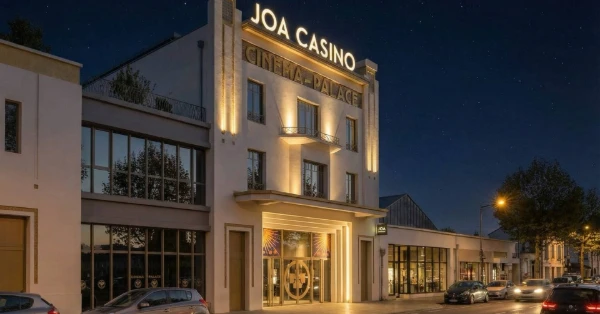
Saumur entered a new chapter in its tourism and leisure development on 26 March 2026, when Casino JOA Saumur opened beside the River Loire. Built on the site of the former Le Palace cinema, the establishment became the first casino in Maine-et-Loire, bringing a significant new attraction to a town traditionally associated with wine, historic architecture and equestrian culture. The project represents a global investment of €15 million and created 67 permanent jobs at opening. Its importance extends beyond gambling, with a restaurant, bars and entertainment facilities designed to attract both residents and visitors. By June 2026, the casino had already recorded more than 67,000 admissions, providing early evidence of substantial interest. The longer-term question is how this activity will influence local employment, tourism, public finances and the businesses that depend on Saumur’s visitor economy.
How Casino JOA Saumur Became a Reality in 2026
The opening of Casino JOA Saumur marked the successful completion of a project that local authorities had pursued for decades. Situated at 13 Quai Carnot, the casino occupies a prominent position near the historic centre, overlooking the Loire. The former Le Palace cinema offered an opportunity to redevelop an established urban site rather than construct an entirely separate leisure complex outside the town. This location makes the new establishment part of Saumur’s existing commercial and tourist environment, with restaurants, accommodation and historic attractions already operating nearby. Its conversion also gave a prominent waterfront building a different economic purpose while maintaining activity in an area closely connected to the town’s identity.
One of the most important developments behind the casino was a change in French legislation. For many years, permission to operate casinos was largely restricted to particular categories of towns, including recognised seaside and spa resorts. The law of 14 December 2023 widened eligibility to certain municipalities with significant equestrian heritage. Saumur qualified through its connection with the historic Cadre Noir and the local horse-racing tradition. This was particularly relevant because the town’s international equestrian reputation had not previously been sufficient to secure authorisation for a casino. The legislative change enabled Saumur to pursue an economic opportunity previously unavailable under the traditional licensing rules.
Following the change in legislation, the municipality established a public-service delegation arrangement with Groupe JOA, an established French casino operator. The contract was signed on 5 August 2024 for a 20-year period. Preparatory demolition and asbestos-removal work began in November 2024, followed by gaming authorisation on 16 May 2025 and the ceremonial laying of the foundation stone on 5 June 2025. The casino opened to customers on 26 March 2026, with its formal inauguration taking place on 11 June. This relatively rapid sequence of approvals, construction and recruitment illustrates how a change in national legislation translated into a substantial local investment within just over two years.
Inside the New Riverside Casino and Entertainment Complex
Casino JOA Saumur was designed as a leisure venue offering more than conventional gaming facilities. Its overall development occupies approximately 2,100 square metres, according to the initial project documentation. The ground floor accommodates Le Comptoir restaurant, a lounge bar and a flexible entertainment area of approximately 150 square metres. The restaurant provides around 80 seats, creating a dining option for visitors who may have no intention of gambling. The interior design draws inspiration from Saumur’s equestrian heritage, connecting the building’s modern appearance with a cultural tradition that has shaped the town for generations. This combination of food, social activity and entertainment gives the establishment several potential sources of customer spending.
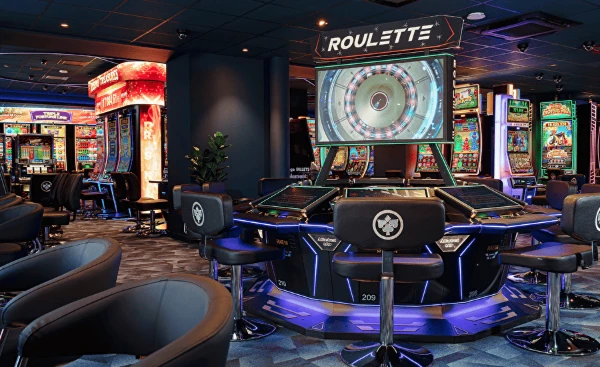
The gaming area on the upper floor includes 125 slot machines, seven electronic blackjack positions and 20 electronic English roulette positions. Traditional table games comprise two blackjack tables, one English roulette table and one Ultimate Texas Hold’em poker table. A dedicated sports bar provides another space for visitors who prefer watching sporting events or meeting friends. The range of facilities reflects a broader commercial approach in which different activities encourage customers to remain on the premises for varying lengths of time. Importantly, the restaurant, lounge and scheduled entertainment provide reasons to visit without entering the gaming area, although access to gambling remains subject to French age and identification requirements.
The casino’s programme of concerts, social evenings and seasonal activities is particularly relevant to Saumur’s year-round leisure economy. Traditional tourism in the Loire Valley often follows seasonal patterns, with stronger demand during holiday periods and major cultural events. An indoor venue operating throughout the year can help broaden the range of evening activities available during quieter months. Its central location also allows visitors to combine a meal or event with time spent elsewhere in town. Nevertheless, the casino’s ability to generate additional economic activity depends partly on whether customers are making new trips to Saumur or simply transferring spending from existing local businesses.
Investment, Employment and the Local Economic Benefits
The financial scale of the development makes Casino JOA Saumur an important private investment for the town. Municipal project information published in 2025 placed construction investment at €8 million and the overall investment at €15 million. These figures describe different aspects of the same development and should not be added together. Around 50 local companies participated in the construction work, helping distribute activity among businesses involved in building, installation and related services. For Saumur, the short-term benefit was therefore not limited to the completed casino: expenditure during redevelopment also created commercial opportunities before the first visitors arrived.
Employment represents one of the clearest direct economic effects. Groupe JOA recruited approximately 67 employees on permanent contracts for the opening, covering activities such as gaming operations, customer service, catering, security and management. A casino requires staff across different shifts because its operating hours extend well beyond a typical retail working day. This creates a mixture of professional roles and offers potential career opportunities in hospitality and regulated gaming. Permanent employment can support local household spending, while the need for specialist training may also help employees develop transferable skills. However, the number of jobs created should not automatically be interpreted as an equivalent increase in total regional employment, since some recruits may have previously worked for other businesses.
Public revenue is another major consideration. The original delegation documentation identified an annual payment of €120,000, while additional casino-related fiscal receipts depend on the operation’s financial performance and applicable taxation arrangements. At the June 2026 inauguration, local reporting indicated that Saumur hoped to receive between €2 million and €3 million annually in casino-related fiscal revenue. This was a projection rather than a confirmed full-year result. The distinction matters because the actual amount will depend on gambling turnover, gross gaming revenue, tax rules and the casino’s sustained performance. Such income could provide additional scope for municipal investment, but its allocation remains a matter for local budget decisions.
What the First Months Reveal About Visitor Demand
Early attendance figures provide an indication of the casino’s initial appeal. By 10 June 2026, Casino JOA Saumur had recorded 67,313 admissions, following its opening on 26 March. Reports from the formal inauguration also referred to daily attendance approaching 1,000 people, with peaks of approximately 1,500. These figures suggest that the establishment attracted considerable interest during its opening months. They do not, however, establish how many unique individuals visited, because the same customer may enter several times. Nor do they show how much additional spending occurred elsewhere in Saumur. Attendance is a useful starting point for evaluating demand, but it is not a complete measure of economic impact.
The composition of the visitor base is equally significant. Initial reports indicated that traditional table games attracted 5,576 players and that customers came from an area extending roughly 150 kilometres around Saumur, with Maine-et-Loire particularly well represented. This regional reach suggests that the casino can attract people from beyond the immediate municipality, potentially bringing additional restaurant, transport and accommodation expenditure into the wider area. At the same time, a substantial proportion of nearby customers may return home after their visit rather than book overnight stays. The distinction between local, regional and longer-distance visitors will influence how much secondary revenue other tourism businesses receive.
The restaurant supplied another measurable sign of activity. By 10 June, Le Comptoir had served 5,135 covers since opening, including both paid and complimentary meals. This indicates that dining has become a meaningful part of the venue’s early operation, although complimentary covers should not be counted as direct restaurant sales. For neighbouring businesses, the effects are less straightforward. Some visitors may combine casino entertainment with shopping, sightseeing or meals elsewhere, while others may concentrate their spending inside the casino complex. Understanding the overall balance will require longer-term evidence from accommodation providers, local restaurants and visitor statistics, rather than relying exclusively on figures supplied by the operator.
How the Casino Could Reshape Tourism and Saumur’s Future
Saumur already possesses a distinctive tourism identity built around its château, the Loire landscape, wine production and the Cadre Noir. The casino adds an evening entertainment option to this established collection of attractions rather than replacing them. Visitors interested in local history can spend the afternoon exploring the town before attending a concert or restaurant booking near the river. Wine tourism and equestrian events also provide opportunities for combined visits, particularly when groups arrange short breaks rather than single-day excursions. This variety could strengthen Saumur’s appeal as a destination where activities continue after museums, shops and historic sites have closed.
The opening may also contribute to tourism outside the busiest months. Hotels and guesthouses generally benefit when visitors have enough reasons to remain overnight, particularly during weekends and periods without major festivals. A year-round programme of entertainment could encourage some additional short stays, especially among people travelling from neighbouring parts of western France. However, higher casino attendance does not necessarily translate into a comparable rise in hotel bookings. Establishing that relationship would require accommodation statistics, visitor surveys and comparisons with previous years. The most sustainable tourism benefit would come from encouraging genuinely additional trips, rather than shifting existing visitor expenditure between businesses.
There are also wider urban considerations. Redeveloping the former cinema has brought renewed activity to a waterfront site, but additional visitors can increase demand for parking, transport and evening services. Residents and business owners may assess the project differently depending on their proximity to the building and the effects on local trade. Casino operations also involve responsibilities relating to gambling-related harm. French rules restrict gambling to adults and require identity checks for gaming-room access, while operators must maintain responsible gambling measures. These safeguards matter because the economic benefits of a casino should be considered alongside its social responsibilities, including the risks of excessive spending and gambling dependency.
Long-Term Economic Prospects Beyond the 2026 Opening
The casino’s long-term contribution will depend on maintaining visitor interest after the initial curiosity surrounding its opening fades. A strong first quarter of trading can demonstrate demand, but seasonal changes, household spending pressures and competition from other leisure activities may affect future performance. Groupe JOA will need to maintain its restaurant and entertainment offering while managing the costs of staffing, property maintenance and regulated gaming operations. For the municipality, future assessments should focus on annual fiscal receipts, permanent employment, visitor origins and the extent to which the establishment supports surrounding businesses. These measures provide a more reliable picture than headline attendance figures alone.
Saumur’s experience could also attract attention from other French towns examining the possibilities created by changes to casino legislation. The town benefits from a combination of equestrian heritage, an established tourist economy, a central riverside location and an operator prepared to commit substantial investment. These conditions are not automatically reproducible elsewhere. A successful casino development requires appropriate legal eligibility, sustainable customer demand, suitable premises and careful cooperation between local authorities and the operator. Saumur therefore offers an early example of how revised national rules can support town-centre investment, but the economic results will be specific to its circumstances.
By the closing months of 2026, Casino JOA Saumur had already established several measurable achievements: a completed €15 million development, 67 permanent positions at opening and more than 67,000 admissions recorded within its first months. Its conversion of the former Le Palace cinema has added a substantial leisure facility to the Loire waterfront, while the projected municipal revenue offers a potentially important source of future funding. The evidence for broader economic transformation remains preliminary. What will matter over the coming years is whether the casino consistently attracts additional visitors, generates reliable public income and supports commercial activity beyond its own doors. Those outcomes will determine its lasting significance for Saumur’s economy.