Grand Lisboa Palace in Macau: Casino, Three Luxury Hotels and Cotai’s New Tourism Experience
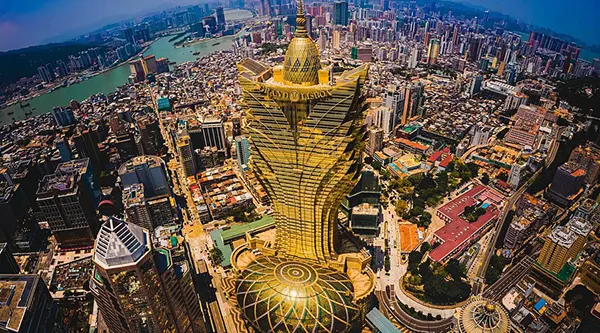
Grand Lisboa Palace Resort Macau has become one of Cotai’s most distinctive large-scale destinations, bringing together Casino Grand Lisboa Palace, three luxury hotel towers, restaurants, shops, wellness facilities, gardens, exhibitions and family attractions at one address. SJM Resorts began the phased opening of the complex on 30 July 2021, marking the long-established Lisboa brand’s first major move from the Macau Peninsula to Cotai. The full concept developed gradually as THE KARL LAGERFELD opened in 2023 and Palazzo Versace Macau held its grand opening in 2024. By 2026, the resort operates 1,892 rooms and suites across three hotels, each with a clearly different design identity. Gaming remains an important part of the business, but accommodation, dining, art, fashion and leisure now give visitors several reasons to spend time here without entering the casino. This combination makes Grand Lisboa Palace relevant not only to casino guests but also to couples, families, food-focused travellers and visitors seeking a quieter alternative to Cotai’s busiest central resorts.
A New-Generation Landmark on Cotai
Grand Lisboa Palace stands on Rua do Tiro beside the Macau East Asian Games Dome, towards the southern side of Cotai. The setting places it close to Macau International Airport, the Taipa Ferry Terminal, major border connections and the larger entertainment district, while giving the complex more physical space than would have been available on the densely built Macau Peninsula. The resort can usually be reached from the airport and other Cotai transport points in less than ten minutes by road, although actual journey times depend on traffic and border demand. Complimentary shuttle services connect the property with selected entry points and areas of Macau, including the Border Gate, Hengqin Port and destinations on the peninsula. As timetables can change for public holidays, events or traffic restrictions, travellers should confirm the current route before setting out rather than relying on an older schedule.
The architecture deliberately combines European palace forms with Chinese decorative references. Its broad façades, arched windows, formal symmetry, mansard-style roofs and landscaped courtyards recall European buildings from the Neoclassical and Belle Époque periods. Dragons, phoenixes, lotus patterns and other traditional symbols appear within this Western framework, creating a style related to the Chinoiserie movement that influenced European design in the seventeenth and eighteenth centuries. The result is not a recreation of one historic palace but a modern interpretation of Macau’s long relationship with both Chinese and European culture. This approach continues inside the hotels, restaurants and public areas, where contemporary design is mixed with local artwork, maritime references, embroidery, mosaics and specially commissioned decorative pieces.
The scale of the development is easier to understand from inside than from the road. Hotel towers, gaming areas, restaurants, retail floors and event facilities are organised around interconnected public spaces rather than a single central hall. Jardim Secreto, the landscaped garden between the towers, provides a visual centre for the complex. Covering more than 1,000 square metres, it includes lawns, geometric hedges, gazebos, colonnades and an illuminated ornamental dome. The garden can be viewed from selected guestrooms and is used for walks, photography, private events and wedding ceremonies. This outdoor element helps soften the scale of the buildings and gives the property a noticeably calmer character than resorts organised almost entirely around indoor entertainment.
Casino Grand Lisboa Palace and Its Role in the Resort
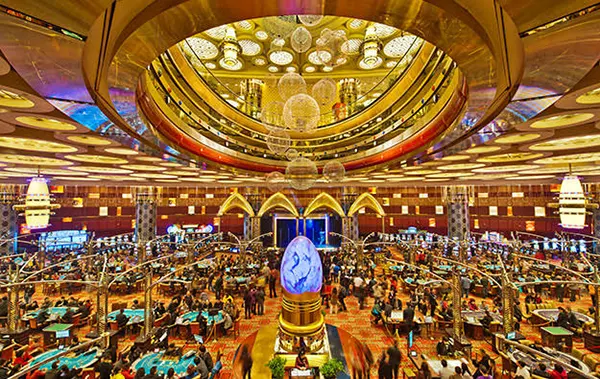
Casino Grand Lisboa Palace is operated by SJM Resorts, one of the six concessionaires authorised by the Macau Government to conduct casino gaming. SJM has local roots dating back to the early development of Macau’s regulated casino industry, but Grand Lisboa Palace represents a more recent stage in its history. The casino brought the company’s best-known gaming name to Cotai, where most of Macau’s largest modern resorts are concentrated. The gaming floor is designed for the local market’s familiar combination of live tables and electronic games, with activity divided between different playing areas and customer levels. Visitors do not need to stay at one of the three hotels to enter, but access is controlled and anyone under the age of 21 is prohibited from entering casino areas under Macau law.
Current operating figures show that gaming remains central to the resort even as its non-gaming facilities expand. During the first quarter of 2026, Casino Grand Lisboa Palace recorded gross gaming revenue of HK$1.752 billion, an increase of 11.7 per cent compared with the same period in 2025. Revenue from electronic games reached HK$196 million during the quarter, while the rest came from live-table activity serving rolling and non-rolling customers. These figures should not be interpreted as an indication of what an individual player can expect to win. They instead show the overall scale of activity at a regulated casino visited by large numbers of customers. Casino games are designed with a mathematical advantage for the operator, so gaming expenses should always be treated as entertainment costs rather than a source of income.
The casino is physically integrated into the resort but does not dominate every visitor route. Hotel guests can reach accommodation, restaurants, shops, spas and family facilities without making gaming the focus of their stay. This separation matters for mixed groups in which only some adults intend to gamble. Those who enter the casino should carry valid identification, confirm game rules before placing a bet and decide on a fixed spending limit in advance. Cash machines, loyalty benefits and extended opening hours can make it easy to spend more time or money than planned. A practical approach is to use only money set aside for leisure, avoid borrowing, take regular breaks and stop once the chosen limit has been reached. Macau also provides responsible-gaming information and support for anyone concerned about their own behaviour or that of someone close to them.
Three Luxury Hotels with Separate Identities
The accommodation is divided between Grand Lisboa Palace Macau, THE KARL LAGERFELD and Palazzo Versace Macau. Together, the three towers contain 1,892 rooms and suites, but they are not simply different wings of one standard hotel. Each has its own reception, visual language, room categories, restaurants and selected wellness facilities. In 2026, all three are recognised as Forbes Travel Guide Five-Star hotels and hold two MICHELIN Keys. This made Grand Lisboa Palace the only integrated resort reported by SJM as having every hotel within the complex rated Five-Star by Forbes Travel Guide. The shared awards indicate a consistent service level, yet the choice of tower still has a considerable effect on atmosphere, room design and price.
Grand Lisboa Palace Macau is the largest and most traditional of the three, with 1,350 rooms and suites ranging from approximately 60 to 300 square metres. Its interiors combine modern Chinoiserie, Western detailing and references to Macau’s maritime history. Many rooms look towards Cotai or Jardim Secreto, while the generous entry-level room size gives guests more space than is typical in many city hotels. The tower includes indoor and outdoor swimming areas, a 24-hour gym, spa services and direct access to the resort’s main public facilities. Its broad range of room categories makes it the most flexible option for first-time visitors, families, business travellers and guests who prefer the Lisboa identity over a fashion-led hotel theme.
The two designer hotels are smaller, with 271 rooms and suites each. THE KARL LAGERFELD is the only hotel tower whose entire interior was designed by Karl Lagerfeld. Its rooms combine dark tones, bold patterns, contemporary furnishings and reworked Chinese motifs, with standard rooms beginning at about 60 square metres. Palazzo Versace Macau is the first Palazzo Versace hotel in Asia and uses Versace Home furniture, Italian mosaics, marble, the Medusa emblem, Greca patterns and Barocco prints. Local chrysanthemums and dragons are incorporated into the Italian design rather than added as separate decoration. Its rooms generally begin at around 55 to 60 square metres, while larger suites offer garden views and considerably more private space.
How the Choice of Hotel Changes the Stay
Grand Lisboa Palace Macau is the most straightforward choice for guests who want convenient access to the full resort and do not require a strong fashion theme. Its large inventory means there are more room types, including twin-bed categories suited to friends, families and tour groups. The restrained Chinoiserie interiors may also appeal to travellers staying for several nights, as the rooms are decorative without being visually overwhelming. Access to the main restaurants, shopping floors, casino and garden is simple, although the size of the complex means that walking from a guestroom to a distant venue can still take time. Guests with mobility concerns should ask about room location and the nearest lift when booking.
THE KARL LAGERFELD suits visitors who regard hotel design as an important part of the trip. The interiors use Lagerfeld’s modern interpretation of Chinese and European aesthetics, with high-contrast surfaces, bespoke furniture, patterned carpets and dramatic lighting. Even the standard Klassik Room measures about 60 square metres, while the 350-square-metre Autograph Suite represents the most elaborate end of the range. The hotel also has its own spa, pools and dining venues, allowing guests to spend much of their stay within the tower. Its assertive style may not appeal to travellers who prefer neutral interiors, but it offers a degree of visual individuality rarely found in a large casino resort.
Palazzo Versace Macau provides a warmer and more ornate alternative, drawing heavily on the fashion house’s Milanese identity. The lobby contains a large interpretation of the Versace atelier at Via Gesù, made with more than 80,000 hand-laid enamel mosaic tiles. Guestrooms continue the theme through upholstered furniture, silk details, terrazzo flooring, custom textiles and Versace Home pieces. The hotel has indoor and outdoor pools, a wellness retreat, a personal training studio and two Italian restaurants. It is well suited to couples, fashion-conscious guests and travellers marking a special occasion. At the same time, the highly decorative rooms should be considered a matter of personal taste rather than an automatic advantage over the other two towers.
Dining, Culture and a Broader Cotai Tourism Experience
Food is one of the strongest reasons to visit Grand Lisboa Palace without entering the casino. The dining selection covers Cantonese, regional Chinese, Japanese, Italian, Portuguese, international buffet and casual options. Palace Garden serves refined Cantonese cooking in a room decorated with Suzhou embroidery and held one MICHELIN Star in the 2026 Hong Kong and Macau guide. Other notable venues include Zuicho, Mesa by José Avillez and Don Alfonso 1890, while Lisboa Bistrô provides a more informal Portuguese menu. Across the resort, the 2026 MICHELIN Guide awarded a combined total of three stars to its restaurants. Advance reservations are sensible for recognised fine-dining venues, and guests should check dress codes, child policies and closing days before arranging an evening around a particular restaurant.
Grand Lisboa Palace also uses galleries and event spaces to present Macau’s history and changing cultural calendar. The Grand Lisboa Palace Art Gallery has hosted The Lisboa, Stories of Macau, an exhibition covering more than 500 years of local history through themed areas, artefacts, digital displays and interactive activities. Its subjects range from Macau’s development as a trading port to the people, customs and architecture that shaped the city’s East–West identity. The resort’s 2026 programme has also included fashion exhibitions, live productions, culinary events and seasonal installations. These events are not necessarily permanent, so visitors should check dates, admission arrangements and reservation requirements before travelling specifically for a show.
Families have more options than the formal architecture initially suggests. Current facilities and programmes include Sportopia’s virtual and physical sports games, AI-based attractions, a martial arts activity area and A Grand Candy Gala, an indoor play venue intended mainly for younger children. The retail section includes the New Yaohan department store, a China Duty Free outlet, fashion boutiques, jewellery shops, lifestyle stores and specialist food retailers. Swimming pools, gyms, salons and spas provide quieter alternatives, while Jardim Secreto offers an outdoor break from the shopping and entertainment floors. Availability, prices and operating hours can change, particularly during school holidays and major events, so families should check each attraction separately rather than assuming that every activity follows the general resort schedule.
Practical Planning for a Visit in 2026
Grand Lisboa Palace is located at Rua do Tiro in Cotai, close to the airport and the Macau East Asian Games Dome. Complimentary shuttle buses operate on selected routes, including connections with the Border Gate, Hengqin Port and parts of the Macau Peninsula. Other routes may serve ferry terminals, the airport, Old Taipa Village and neighbouring tourism areas, but schedules are adjusted periodically. Taxis are widely available, and local public buses provide a lower-cost option for travellers familiar with the network. Guests arriving through Hong Kong, Zhuhai or Hengqin should allow extra time for immigration procedures, particularly at weekends and during public holidays in mainland China.
A two-night stay is enough to sample the three main sides of the resort: accommodation, dining and leisure. Travellers interested in Macau beyond Cotai can combine the property with Old Taipa Village, Coloane, Senado Square, the Ruins of St Paul’s and the historic streets of the peninsula. The resort’s relative proximity to the airport makes it suitable for a final night before an early departure, although morning traffic and check-in requirements still need to be considered. Hotel prices vary greatly by tower, room type, weekday and event calendar. Packages may include dining, transport or shopping benefits, but the total cost should be compared with a standard room rate rather than judged by the advertised extras alone.
Grand Lisboa Palace represents Macau’s wider move towards resorts that combine gaming with hotels, food, retail, culture and family leisure. Its casino remains commercially significant, generating HK$1.752 billion in gross gaming revenue during the first quarter of 2026, while the three hotels recorded a combined occupancy rate of 94.6 per cent during the same period. Yet the most distinctive feature is not a single game, restaurant or designer name. It is the ability to choose between three genuinely different hotels while retaining access to one connected complex. Travellers who plan around their preferred hotel style, restaurant bookings and current event schedule are likely to gain more from a stay than those who treat Grand Lisboa Palace solely as another stop on a Cotai casino tour.